






Shenzhen University Medicine Forum:Lecture on Prevention and Control of Emerging Infectious Diseases and Reverse Pathogenics
On the morning of November 21, 2025, under the chairmanship of Professor Xinchun Chen from the School of Basic Medical Sciences (Faculty of Medicine), Professor Weifeng Shi from Shanghai Jiao Tong University was invited as the guest speaker for the 149th session of the Shenyi Forum. He delivered an academic lecture titled “Prevention and Control of Emerging Infectious Diseases and Reverse Pathogenics” at Building A7, Shaheyuan, Lihu Campus, Shenzhen University. The event was attended by faculty and students from the Faculty of Medicine and related schools.
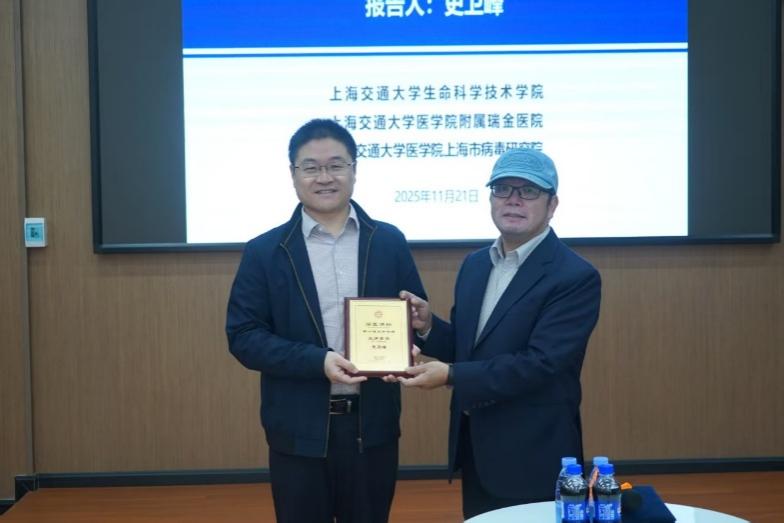
Professor Shi emphasized that emerging infectious diseases continue to pose a serious threat to human health. Throughout history, there have been five major pandemics, four of which were caused by influenza A viruses; the most recent was caused by SARS-CoV-2. Research has shown that approximately 75% of viruses capable of infecting humans originate from wildlife. Following an outbreak, viral origin tracing plays a crucial role in identifying the animal source, clarifying transmission pathways, and preventing further spillover to humans, thereby helping to control the spread of disease. By contrast, the concept of “reverse pathogenics” focuses on proactive metagenomic surveillance of viruses in animal hosts before outbreaks occur. This approach aims to identify potential pathogens in advance and to establish technological and viral strain reserves—effectively shifting the front line of epidemic prevention and control forward.
The lecture was organized into three main sections. Using recently emerged avian influenza viruses capable of infecting humans, along with SARS-CoV-2, Professor Shi first presented his laboratory’s work on tracing the origins of emerging infectious diseases. He then introduced the concept of reverse pathogenics, using tick-borne viruses as a case study to illustrate his team’s work in this emerging field.
Focusing on influenza viruses, Professor Shi detailed his team’s origin-tracing research on the H7N9 avian influenza virus, which emerged in 2013. Through systematic analysis, they proposed the “dynamic reassortment” model, in which viruses are transmitted from waterfowl to terrestrial poultry and continue to reassort as the poultry are transported overland to other provinces. This model clarified how influenza viruses spread and evolve across different hosts and geographic regions. Building on this work, the team further elucidated the mechanisms of increased virulence in the highly pathogenic H7N9 strains that emerged in 2017.
In addition, through long-term surveillance of live poultry markets, the team found that H9N2 has become the predominant circulating strain and confirmed its ability to infect humans, providing a critical early warning for public health and disease prevention efforts.
In response to the COVID-19 pandemic, Professor Shi’s team was among the first to detect and report the emergence of the virus in humans, earning widespread recognition from the international scientific community. Addressing ongoing debates regarding the origin of SARS-CoV-2, the team conducted in-depth analysis of the four amino acid insertions in the spike protein, identifying similar insertion patterns in bat β-coronaviruses. These findings provided strong evidence that such insertions can arise through natural evolutionary processes. They also identified a bat coronavirus, RpYN06, which shares approximately 97.2% sequence identity with SARS-CoV-2 and can infect human cells via the same receptor. When combined with ecological data on the distribution of horseshoe bats in Southeast Asia, these results offer further support for the natural origin hypothesis of SARS-CoV-2.
In the field of reverse pathogenics, Professor Shi’s group has focused on tick-borne viruses. They conducted field sampling of ticks in Xinjiang and other regions, applying high-throughput sequencing and viral metagenomics to identify novel tick-borne viruses with the potential to infect humans. Using reverse genetics systems, they successfully "rescued" these candidate emerging pathogens in the laboratory, allowing for the isolation and functional characterization of key viruses before any outbreak occurs. This proactive approach has provided valuable technical capacity and viral resources for the prevention and control of future tick-borne disease epidemics. Professor Shi emphasized that our current understanding of viral diversity remains extremely limited, posing a significant challenge to the early detection and control of emerging infectious diseases. As such, he underscored the importance of strengthening forward-looking research that combines origin tracing with reverse pathogenics.
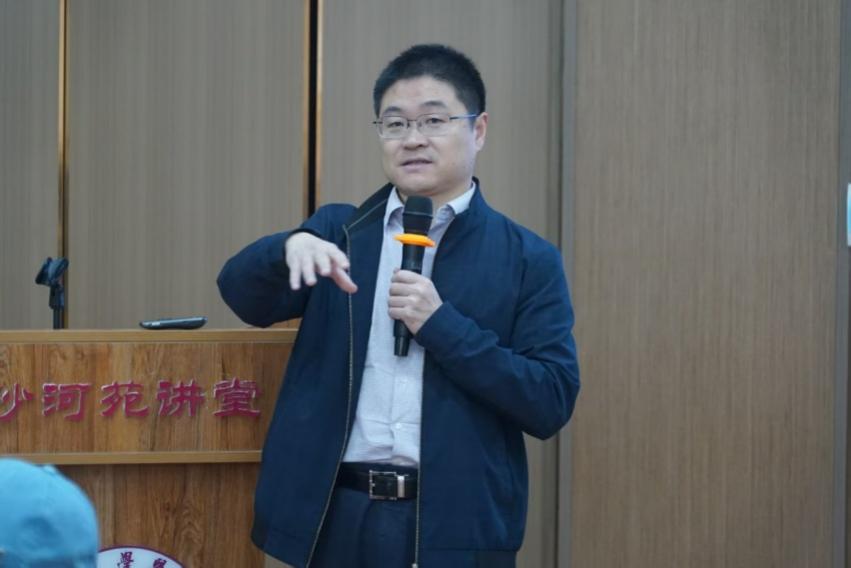
This lecture closely aligned with current global public health priorities. By covering topics ranging from viral origin and evolution to early warning systems and interventions, and from methodological innovations in reverse pathogenics to their application in real-world disease control, the talk provided attendees at Shenzhen University with a comprehensive and up-to-date overview of the frontiers in emerging infectious disease research. It also deepened their understanding of how to advance “from pathogen discovery to prevention and control strategies” through integrated, proactive approaches.
用户登录
还没有账号?
立即注册