




【Shenzhen University Medicine Forum】:Anti-infectious Immunity and Immunotherapy
On the morning of May 8, 2026, at the invitation of Professor Chen Xinchun from the School of Basic Medical Sciences, Faculty of Medicine, Professor Liu Xing from the Shanghai Institute of Materia Medica, Chinese Academy of Sciences, delivered the 172nd lecture of the Shenzhen University Medical Forum at Shaheyuan, Building A7, Lihu Campus, Shenzhen University, presenting an academic talk entitled "Anti-infectious Immunity and Immunotherapy."
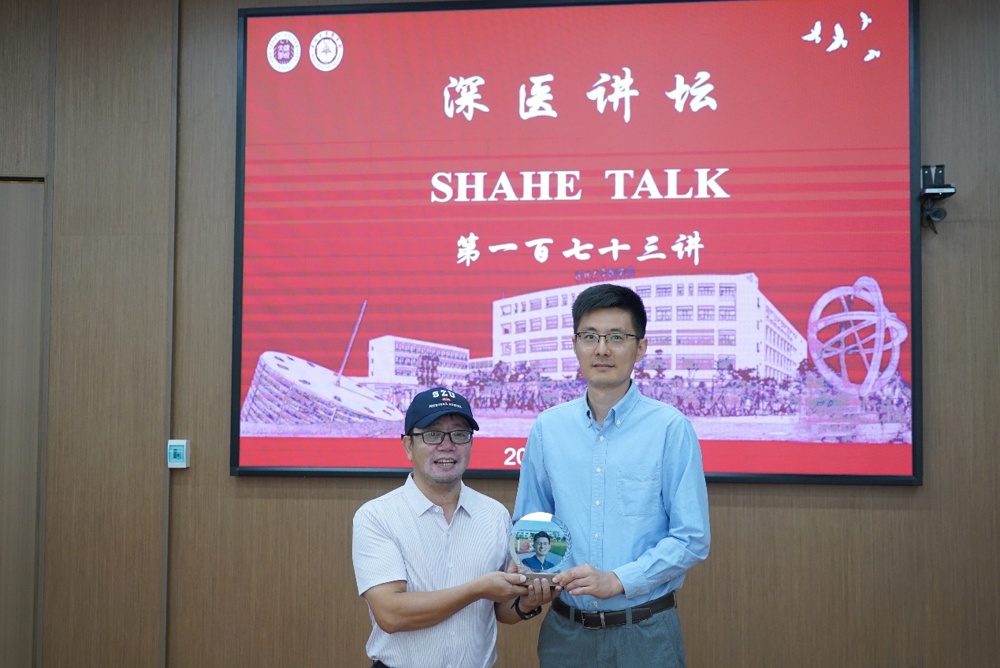
Professor Liu Xing has long centered his research on the regulatory mechanisms of host immune responses triggered by pathogen infection, aiming to elucidate the pathogenic mechanisms of microorganisms and the key immunological principles by which host cells defend against pathogen invasion. His work seeks to provide new therapeutic targets and intervention strategies for the precise treatment of infection-related diseases such as sepsis and autoimmune disorders.
In his lecture, Professor Liu systematically reviewed the discovery trajectory and frontier advances of pyroptosis, a novel form of inflammatory cell death executed by members of the Gasdermin (GSDM) family. Upon initiation by extracellular or intracellular damage signals, GSDM proteins with membrane pore-forming activity become activated, leading to balloon-like cell swelling, plasma membrane rupture, and the massive release of inflammatory mediators including IL-1β, IL-18, and high mobility group box 1 (HMGB1). This process plays a critical role in host immune defense and the surveillance of invading pathogens and abnormal cancer cells, while also being deeply involved in the pathological progression of inflammatory and autoimmune diseases, suggesting that precise modulation of GSDM pore-forming activity and pyroptosis may give rise to novel therapeutic strategies.
Professor Liu further highlighted his team's systematic work on GSDM-mediated pyroptosis triggered by pathogen infection, delineating the complete pyroptosis pathway from host recognition to downstream signal transduction. In Group A Streptococcus infection, the bacterial virulence protease SpeB directly cleaves GSDMA in host skin epithelial cells, releasing its pore-forming N-terminal fragment and triggering pyroptosis. This process converts a pathogen virulence factor into a host defense initiation signal, revealing a novel immune defense mechanism against Group A Streptococcus infection. In a Yersinia infection model, the host employs the lysosome-anchored Rag-Ragulator complex, responding to Toll-like receptor stimulation and TAK1 kinase inhibition, to recruit and activate the FADD–RIPK1–Caspase-8 complex, which in turn cleaves GSDMD and initiates pyroptosis. This pathway operates independently of the canonical inflammasome and instead depends on the GDP-bound state of Rag GTPases, uncovering a previously unrecognized critical role for the lysosomal metabolic regulatory machinery in pyroptosis initiation. Ultimately, GSDMA and GSDMD serve as the executors of pyroptosis, causing cell lysis and the release of inflammatory mediators through membrane pore formation, constituting the common terminal events of pyroptosis. These studies delineate the precise coupling among pathogen-specific recognition, metabolic regulatory platforms, and pore-forming protein execution, collectively forming an important immune defense network by which the host resists pathogen invasion.
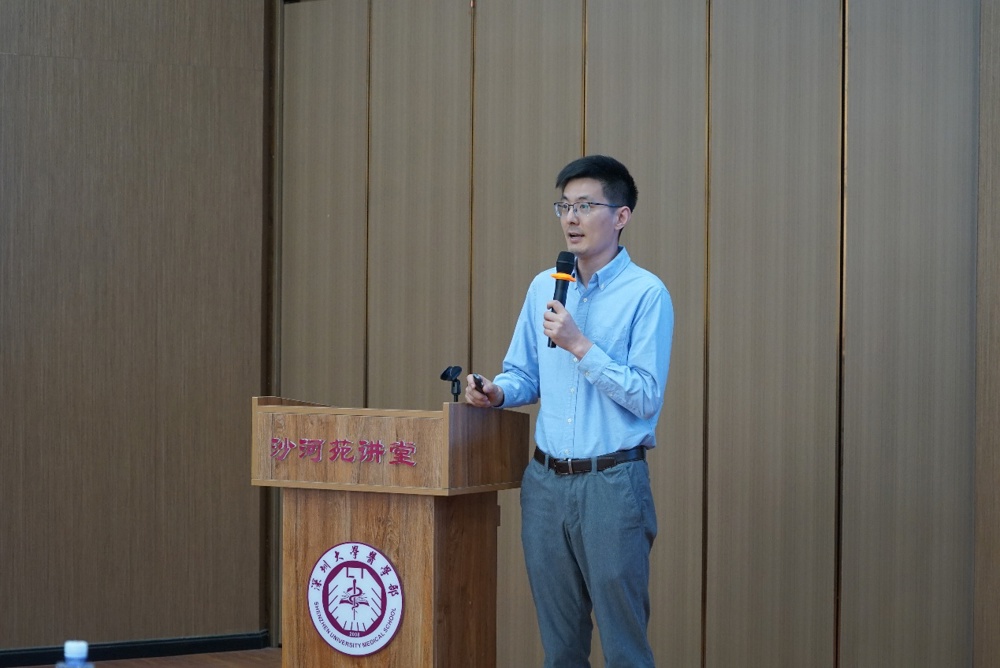
Professor Liu Xing is currently a Professor and Doctoral Supervisor at the Shanghai Institute of Materia Medica, Chinese Academy of Sciences. He received his Ph.D. from the Institute of Biochemistry and Cell Biology, Shanghai Institutes for Biological Sciences, Chinese Academy of Sciences in 2012 and subsequently pursued postdoctoral research there. In 2014, he joined Harvard Medical School as a postdoctoral fellow, supported by the Charles A. King Fellowship, and was promoted to Instructor at Harvard Medical School in 2016. In 2018, he returned to China to establish a laboratory focused on anti-infection immunity and immune diseases. His long-term research focuses on host immune response regulatory mechanisms induced by pathogen infection, achieving multiple original breakthroughs in the fields of pyroptosis and anti-infectious immunity. He has published over 40 high-impact SCI papers and, in the past five years, has published important findings as corresponding or co-corresponding author in leading international journals including Nature, Science, Immunity, Nature Immunology, PNAS, Nature Reviews Molecular Cell Biology, and Nature Reviews Drug Discovery. He has been recognized as an Elsevier China Highly Cited Researcher and listed among the world's top 2% of scientists. As principal investigator, he leads projects including the National Key R&D Program of China (Young Scientists Program), an Innovative Research Group (Category B) of the National Natural Science Foundation of China, the NSFC Distinguished Young Scientist Fund, and the Shangsi Exploration Scholar Program. His honors include the 2026 Tan Kah Kee Young Scientist Award in Life Sciences, the American Association of Immunologists Young Scientist Award, the Harvard Outstanding Chinese Life Science and Medicine Academic Award, and the Shanghai Rising-Star Award.
用户登录
还没有账号?
立即注册